Application
Cardiac Ablation
Pulsed field ablation for treatment of cardiac arrhythmias, including atrial fibrillation and ventricular arrhythmias, in collaboration with UKC Ljubljana and Medtronic.
Pulsed field ablation for treatment of cardiac arrhythmias
Over the last decade, our main focus has gradually shifted to applying electroporation for treatment of heart diseases, especially cardiac arrhythmias. Cardiac applications of electroporation (called Pulsed Field Ablation – PFA) have been gaining a tremendous momentum over the last few years. A major shift in treatment of one specific type of arrhythmias, the atrial fibrillation, has been ongoing worldwide thanks to advantages of the non-thermal electroporation-based catheter ablation modality over the well-established thermal catheter ablation methods. Atrial fibrillation is the most prevalent arrhythmia, affecting between 0.5% and 2% of the general population globally, and its prevalence is increasing due to an aging population. As such, it is a huge health and cost burden for all modern societies.
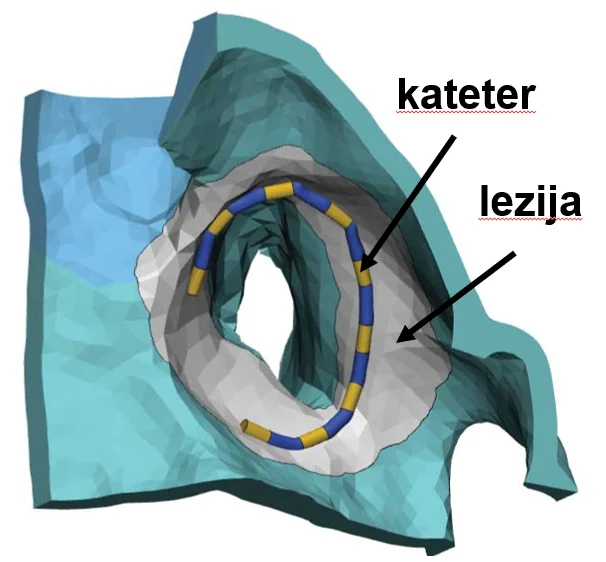
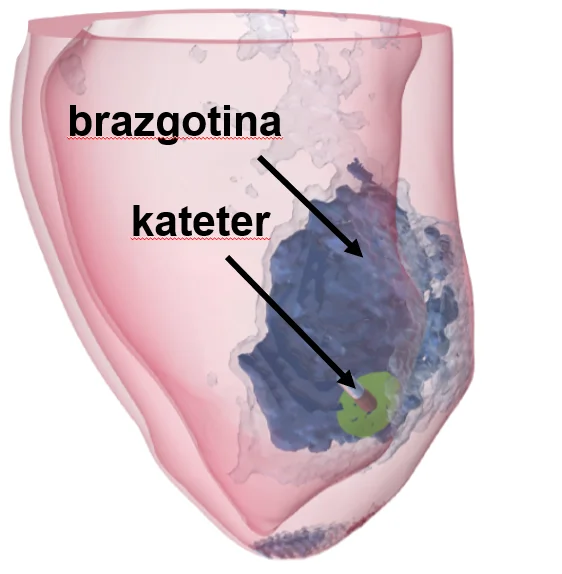
The more complex ventricular arrhythmias are the next target of PFA treatment, and preclinical and clinical trials are already underway. As with the development of ECT of tumors twenty years earlier, our group is at the forefront of these developments in collaboration with medical and research institutions in Slovenia (University Medical Center Ljubljana) and abroad, and with one of the major global manufacturers of the instrumentation for such treatments (Medtronic). Our involvement again includes different stages of development, from basic research at the cardiac cell level to better understand the extremely complex physical and physiological phenomena involved, participation in preclinical and clinical trials, and to the design and optimization of treatment protocols, catheters and electroporation devices. Numerical modeling, medical signal and image analysis are among the tools used extensively in this work.
 Damijan MiklavčičResearch programme leader
 Lea RemsCardiac EP biophysics
 Tomaž JarmClinical studies
 Vid JanCardiac cell experiments
 Jernej ŠtublarIn vivo cardiac studies