Application
Food Processing
Pulsed electric field (PEF) treatment uses short, high-voltage electric pulses to induce electroporation in biological cells.
Applications in food technology
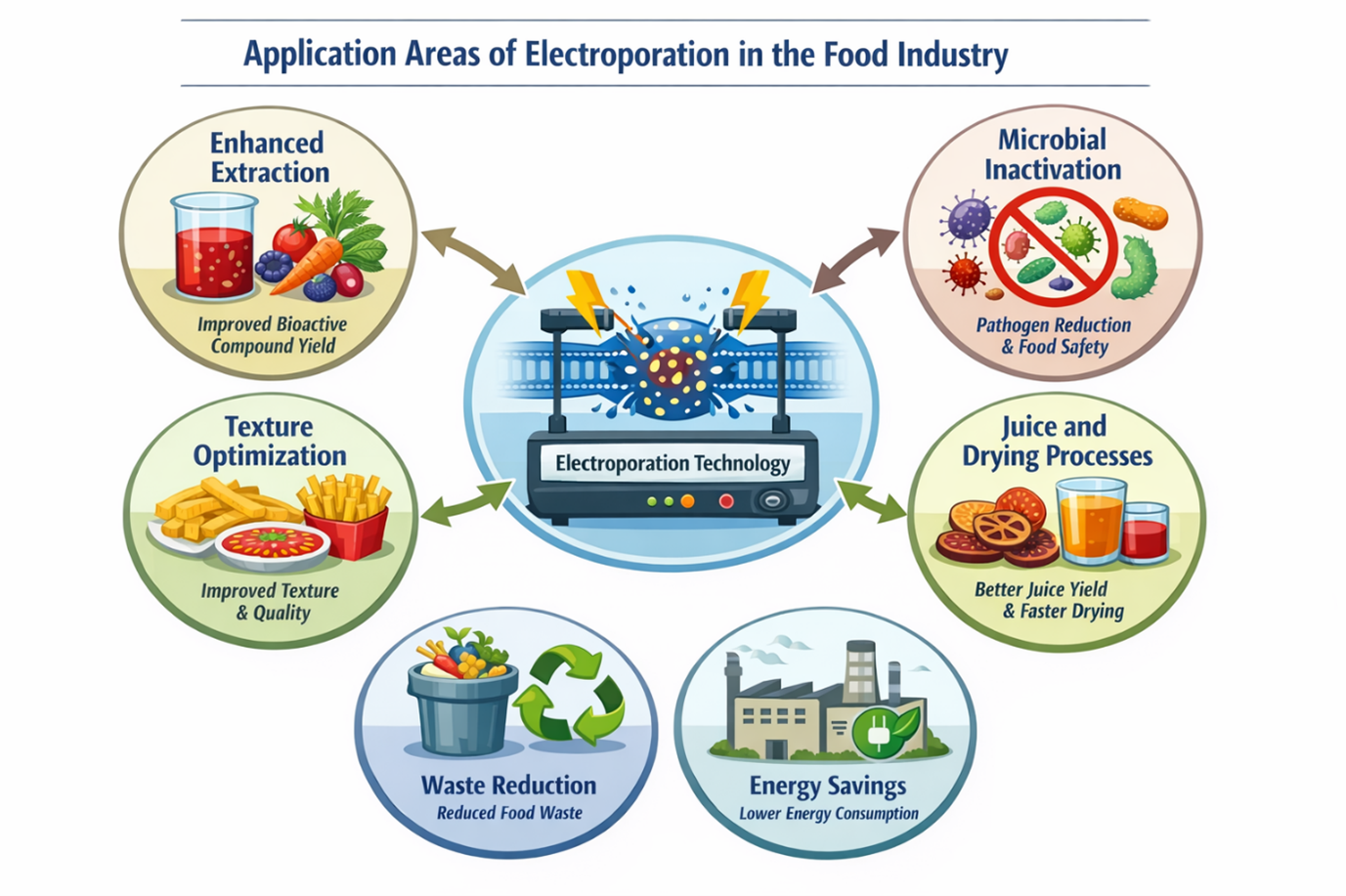
Pulsed electric field (PEF) treatment uses short, high-voltage electric pulses to induce electroporation in biological cells. During electroporation, nanoscale pores form transiently or permanently in cell membranes. These pores allow water, sugars, and other valuable compounds to move more freely in and out of cells. Depending on the treatment intensity and process conditions, PEF can be used either to inactivate microorganisms for improved food safety, or to gently modify plant cells in order to accelerate extraction, drying, or fermentation, while avoiding excessive heating and preserving quality 1. A comprehensive overview of electroporation applications in food processing and biorefinery is given in 2.
The main application areas of PEF in food technology include food preservation 3, enhanced extraction of juices, polyphenols, and antioxidants 4, winemaking 5,6, texture modification 7, drying enhancement 8, and protein processing 9,10. Across these applications, PEF supports more sustainable processing of food and biological raw materials by reducing solvent consumption, shortening extraction times, and lowering overall energy requirements 11,12. As PEF moves towards wider industrial adoption, harmonised reporting of process parameters has become increasingly important. Community guidelines have therefore been proposed for describing PEF treatment conditions and experimental protocols in a transparent and comparable manner 13. In parallel, recent discussions of the remaining challenges for using PEF as a food safety tool 14 help improve reproducibility and support further progress in the field.
Modelling mass transport and thermal effects in PEF-treated plant tissue
Understanding how substances move through electroporated tissue is essential for optimising PEF-assisted extraction and pressing. To address this, we developed a dual-porosity modelling framework which represents electroporated tissue as a medium with two interconnected porous systems: the extracellular space and the permeabilised membrane pathways. The initial model was formulated for solute diffusion 15 and then extended to describe liquid extraction by pressing 16. The modelling approach was validated experimentally using sugar beet tissue, demonstrating its relevance for real food materials 17. A complementary study on spinach leaf tissue further showed that structural heterogeneity in actual plant tissues must be explicitly accounted for in numerical models in order to accurately capture PEF treatment effects 18.
Temperature control during PEF treatment is equally critical. Excessive heating can damage product quality, but moderate temperature increases may synergistically enhance electroporation, microbial inactivation, or mass transfer. Our theoretical analysis of heat generation and redistribution in plant tissue following electroporation examined how pulse-generated heat spreads within the material and how it couples to the electroporation process itself, providing practical guidance for designing safe and effective treatment protocols 19.
Visualising and assessing PEF treatment effects in food materials
The effects of PEF at the cellular and tissue level cannot always be inferred from bulk measurements alone. Different analytical techniques may also emphasise different aspects of the tissue's response to treatment. In a comparative study on PEF-treated plant and animal tissues, we combined electrical impedance spectroscopy, magnetic resonance imaging (MRI), and histological analysis to assess treatment outcomes. The results highlighted that integrating complementary methods yields a more complete and reliable picture of the changes induced by PEF 20.
MRI has proven particularly powerful for visualising electroporation effects without cutting or otherwise damaging the sample. In earlier work, we used MRI to investigate how the electric field distributes itself within potato tubers and to identify where electroporation actually occurs inside the tissue 21. More recently, MRI has enabled detailed observation of how structurally distinct regions within a plant (for example, the soft inner core versus the denser outer cortex of root vegetables) respond very differently to the same PEF treatment. These spatial differences in response are not visible to the naked eye, but MRI makes them clearly observable and quantitatively assessable 22.
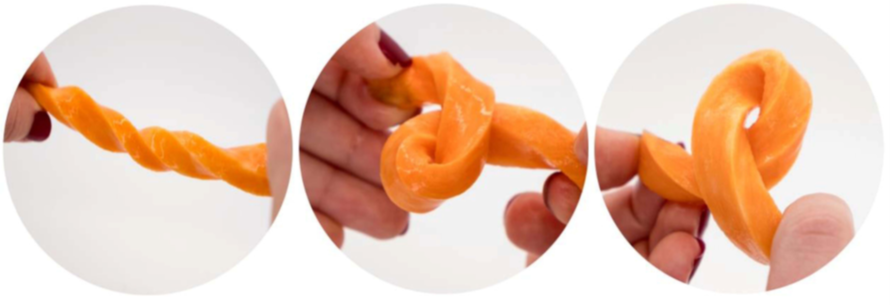
In addition, texture analysis has been revisited as a practical and sensitive tool for determining PEF treatment thresholds. By measuring changes in mechanical properties, texture analysis complements electrical-impedance-based approaches and provides an accessible method for identifying treatment conditions that achieve the desired degree of electroporation without over-processing the product 23.
PEF treatment system design: temperature control and electrode phenomena
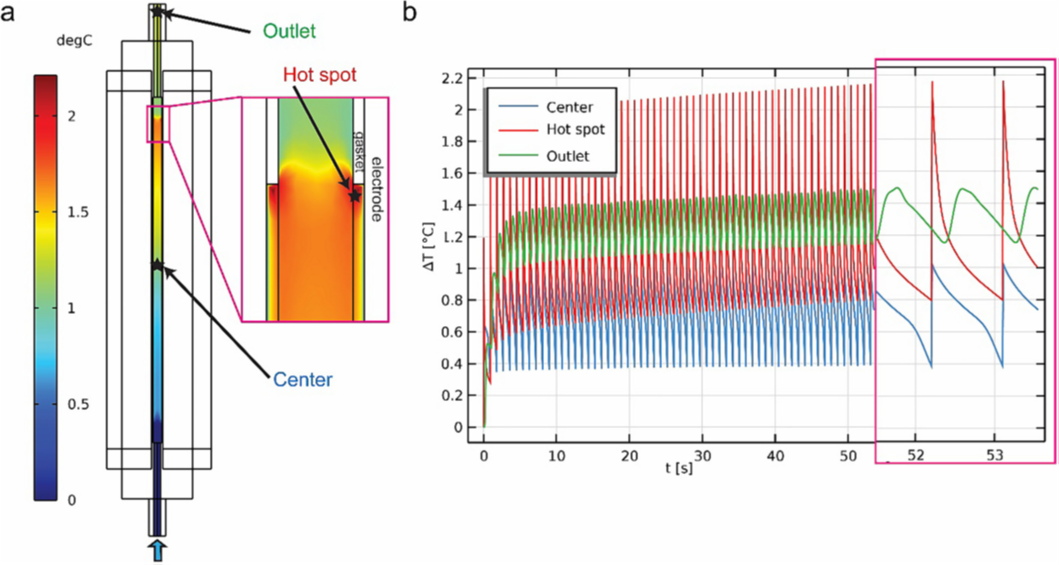
Translating PEF from laboratory experiments to industrial practice requires reliable design and control of treatment chambers in which food materials flow continuously. To support this, we developed a time-dependent numerical model that predicts the temperature distribution within continuous-flow PEF treatment chambers 24. The model captures the interplay between electrical energy input, fluid flow, and heat transfer, and thus helps determine whether the treatment remains both effective and safe across the entire processed volume.
High-voltage pulses can also trigger electrochemical reactions at the electrode surfaces, potentially releasing metal ions or generating undesired by-products in the treated medium. We investigated these electrode-related phenomena by combining experimental observations with numerical simulations 25. The insights gained from this work inform electrode material selection, chamber design, and pulse-parameter optimisation, thereby supporting robust and food-safe industrial PEF systems.
 Matej KranjcNumerical modelling
 Samo Mahnič-KalamizaPEF food processing