Application
Tumor Treatment
Electrochemotherapy and irreversible electroporation for treatment of cutaneous, subcutaneous, and deep-seated tumors in collaboration with the Institute of Oncology Ljubljana and international partners.
Electrochemotherapy and irreversible electroporation of tumors
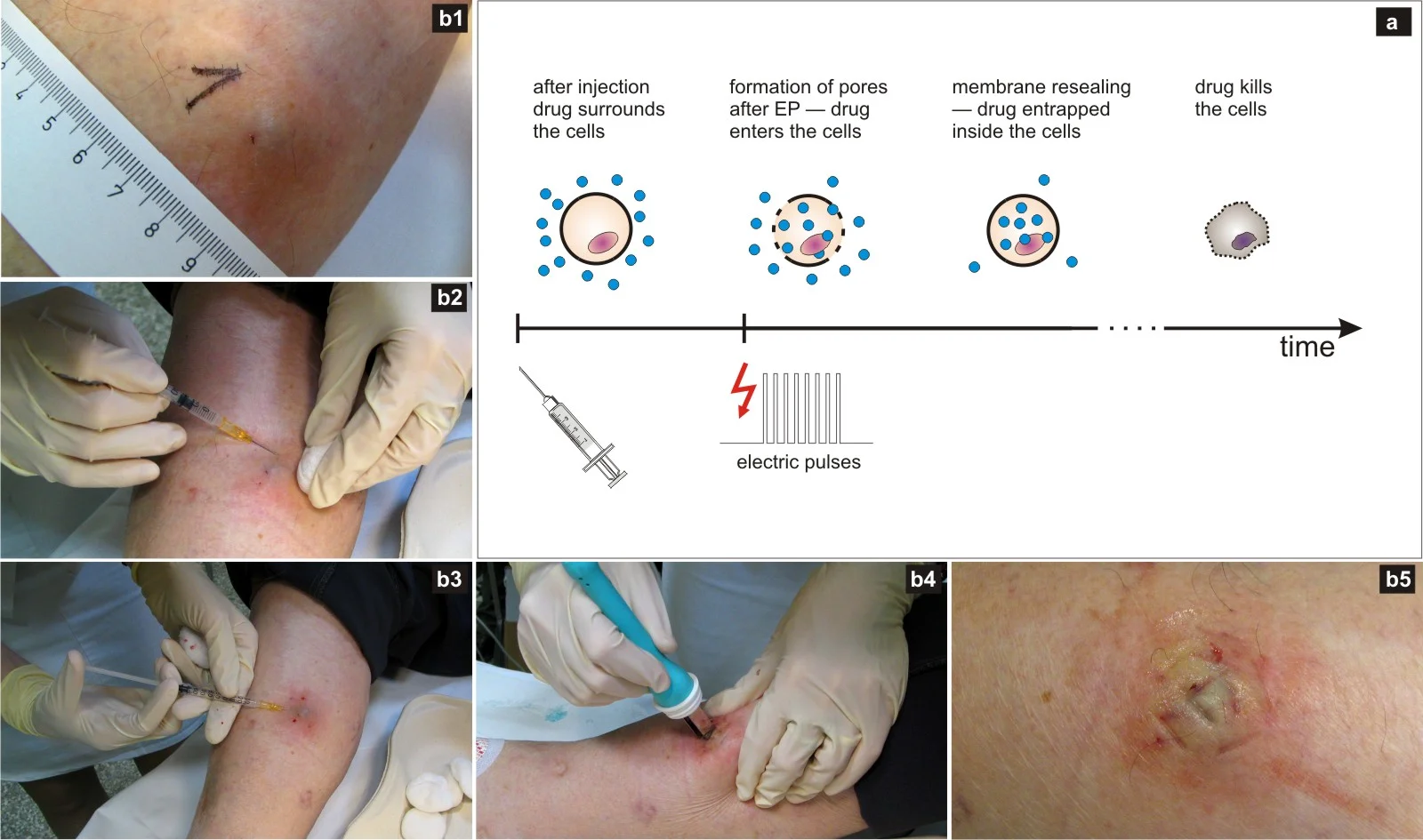
In electrochemotherapy (ECT) of tumors, reversible electroporation is used to increase the uptake of cytotoxic drugs (the chemotherapeutics bleomycin or cisplatin) into the target tumor cells. Electroporation greatly potentiates the effectiveness of the chemotherapeutic drug. Since the electric pulses are delivered locally only to the tumor, the side effects of chemotherapeutics in the rest of the body are greatly reduced. In close collaboration with the Institute of Oncology in Ljubljana and other institutions in Slovenia and abroad, we helped to bring this effective treatment to clinical use. In the beginning, ECT was used to treat easily accessible cutaneous and subcutaneous tumors on the surface of the body. Later, special electrode systems and access routes were developed to also treat deep-seated tumors in various internal organs. ECT is now a well-established methodology used in many centers (especially in Europe) to treat various types of tumors in the skin and internal organs, such as head and neck cancers, and liver and bone tumors. The Laboratory of Biocybernetics developed a prototype for the first clinically approved generator of electroporation pulses for ECT (the Cliniporator) and was also actively involved in development of numerical treatment planning methods for optimization and individualization of ECT for treatment of liver and bone tumors. ECT is used not only in human oncology but also in veterinary oncology.
Unlike reversible electroporation, which is used for enhanced transport of molecules across the membrane in ECT and gene therapy, the so-called irreversible electroporation can be used to directly destroy (ablate) unwanted target tissue. Such ablation treatments are used for treating tumors in organs such as the liver, pancreas, kidney, and brain.
 Damijan MiklavčičResearch programme leader
 Tomaž JarmClinical translation
 Bor KosTreatment planning
 Helena CindričNumerical modelling